
Mining & Exploration Drilling Rigs
Mining and exploration drilling requires equipment capable of working through changing geological formations while providing the control, depth capacity and tooling compatibility needed for subsurface investigation. Synergy Rigs Ghana provides mining and exploration drilling rigs for mineral exploration, geological investigation, sample recovery and selected mining applications. Equipment can be configured according to the drilling method, target depth, hole diameter, formation, sampling requirements, terrain and project workload.
Drilling Systems for Mineral Exploration
The right exploration rig depends on what the drilling program needs to investigate or recover from below ground. Formation, target depth and sampling requirements all influence the drilling method and equipment configuration.
Diamond Core Drilling
Diamond core drilling is used where cylindrical rock samples are required for geological examination. Rig capacity, core size, drill rods, core barrels and target depth should be considered as part of the complete coring system.
Reverse Circulation Drilling
Reverse circulation drilling produces rock chips that can be collected at the surface for geological assessment. The rig, compressor, drill string and sampling arrangement need to work as a matched system.
Rotary Drilling
Rotary configurations can support selected exploration and geological drilling requirements where formation conditions and project objectives suit the method.
DTH Drilling
DTH drilling combines rotation with pneumatic impact and can support selected mining and exploration work in competent hard-rock formations.
Rig Selection for Geological and Sampling Requirements
Exploration drilling is not defined by depth alone. The machine should be selected around the geological information required from the hole and the conditions expected during drilling.
Exploration Workload
Multi-hole exploration campaigns can place greater demands on equipment than individual investigation holes. Expected drilling hours, hole quantity and field conditions should therefore be considered during equipment selection.
Target Depth and Hole Diameter
Depth affects drill-string and pullback requirements, while hole diameter influences rods, bits, hammers and other drilling components.
Sample Requirements
Core samples, rock chips and other geological information can require different drilling methods and supporting equipment.
Feed, Rotation and Pullback
The rig should provide suitable feed, rotation and pullback capacity for the intended drilling system and investigation depth.
Formation Conditions
Rock competency, fracturing, weathered zones and changing geological layers influence drilling method and tooling selection.
Exploration Rigs for Different Development Environments
Exploration targets can be distributed across large project areas, making rig mobility an important part of equipment selection.
01. Crawler-Mounted Exploration Rigs
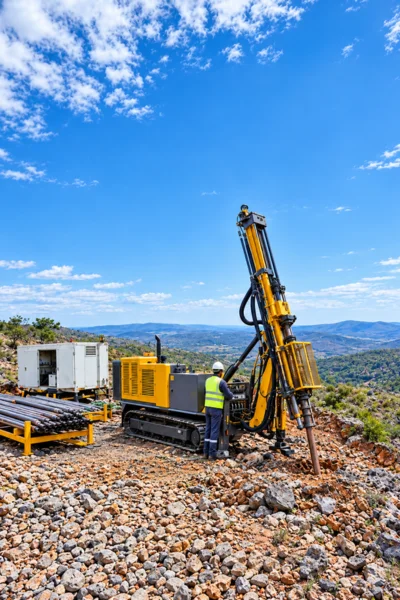
Crawler rigs provide tracked movement across suitable uneven and unpaved terrain, making them relevant where drilling points are located within off-road project areas.
02. Compact Exploration Rigs
Compact configurations can be considered where restricted access, transport limitations or available working space prevent the use of larger equipment.
03. Truck-Mounted Exploration Rigs
Truck-mounted configurations provide road mobility for exploration programs where drilling locations can be reached through suitable road networks.
Supporting Equipment for Exploration Drilling
An exploration rig operates as part of a wider drilling system. Supporting equipment should therefore be matched to the selected drilling method.
General Drilling Components
Casing equipment, pumps, rod-handling systems, hoses and connections, adapters, drilling fluids, sampling equipment, and replacement wear components. Specifying these components alongside the main rig helps maintain compatibility across the complete drilling setup.
Core Drilling Equipment
Core drilling setups can include core barrels, diamond bits, drill rods, water pumps and other components required by the selected coring system.
RC and Pneumatic Equipment
RC and pneumatic drilling configurations may require compressors, compatible drill strings, drilling tools and sample-handling equipment.
DTH Equipment
DTH configurations generally require an appropriately matched compressor, hammer, drill bits, rods and lubrication equipment.
Why Choose Synergy Rigs Ghana for Exploration Drilling?
Mining and exploration projects can differ considerably in geology, sampling objectives, drilling depth and field conditions. Equipment selection should therefore be based on the intended exploration program rather than a standard rig specification.
Equipment for Multi-Hole Programs
Rig capacity, drill-string requirements, tooling and supporting systems can be considered for exploration programs involving repeated drilling across multiple targets.
Equipment for Different Site Conditions
Crawler, truck-mounted and compact configurations provide options for exploration programs operating across different terrain and access conditions.
Exploration-Focused Rig Selection
Rig configurations can be considered according to the drilling objective, formation, target depth, hole diameter and required sampling method.
Complete Drilling System Configuration
The main rig can be considered together with drill rods, bits, hammers, compressors, pumps, core equipment and other supporting components.
Multiple Drilling Technologies
Equipment options can support core, RC, DTH and rotary drilling requirements where appropriate to the intended exploration work.
Tooling and Replacement Components
Wear components and drilling tools can be considered as part of the equipment requirement for ongoing exploration operations.
FAQ About Mining & Exploration Drilling Rigs
1. What drilling rigs are used for mineral exploration?
The required rig depends on the exploration objective, formation, depth and sampling method. Equipment can include diamond core, reverse circulation, DTH and rotary drilling configurations.
2. What is the difference between core and RC drilling?
Core drilling recovers cylindrical sections of formation for geological examination, while reverse circulation drilling typically produces rock chips for collection and assessment.
3. Can crawler rigs be used for mineral exploration?
Yes. Crawler-mounted rigs can be useful where exploration drilling requires movement across suitable uneven and off-road project terrain.
4. Can DTH rigs be used for mining projects?
Yes. DTH equipment can support selected mining and exploration drilling where competent rock requires pneumatic impact.
5. How deep can an exploration drilling rig drill?
Working depth depends on the rig model, drilling method, hole diameter, drill string, formation and overall equipment configuration.
6. What determines the right exploration drilling method?
Important factors include the geological objective, required sample type, formation, target depth, hole diameter and project conditions.
7. What information is required before selecting an exploration rig?
Provide the exploration objective, preferred drilling method, target depth, hole diameter, expected geology, sampling requirements, terrain and anticipated workload.