
Rotary Borehole Drilling Rigs
Rotary borehole drilling depends on controlled rotation, suitable downforce and effective removal of cuttings as the drill advances through the formation. The rig, rotary head, drill string and circulation system therefore need to work as a coordinated drilling setup. Synergy Rigs Ghana provides rotary borehole drilling rigs for water wells and other borehole projects, with configurations selected according to formation type, target depth, hole diameter, site conditions and required drilling method.
Rotary Drilling Systems Configured Around Ground Conditions
Rotary drilling rigs use a rotating drill string and bit to cut, scrape or crush material at the bottom of the borehole. The method is particularly relevant where projects encounter soil, clay, sand, weathered material and other formations suited to rotary drilling. The required machine configuration depends on more than drilling depth. Rotary torque, feed capacity, drill-string specification, bore diameter and circulation requirements all influence how the system should be configured.
Rotary Rig Configurations for Different Project Sites
Mobility affects how efficiently a rig can move between boreholes and position itself at the drilling location.
Compact Rotary Drilling Rigs
Compact rigs can suit projects where restricted access, limited working space or transportation requirements make larger equipment less practical.
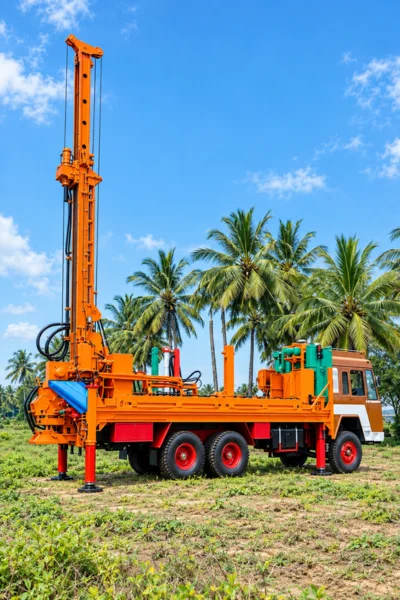
Truck-Mounted Rotary Drilling Rigs
Truck-mounted configurations provide road mobility for contractors regularly moving between accessible borehole and water-well projects.
Crawler-Mounted Rotary Drilling Rigs
Crawler platforms provide tracked mobility for rough, uneven and off-road sites where conventional wheeled access may be difficult.
Tractor-Mounted Rotary Drilling Rigs
Tractor-mounted configurations can provide a practical option for farms, plantations and rural drilling projects.
Rotary Drilling Performance Factors
A rotary rig should be evaluated as a drilling system rather than by maximum depth alone.
Drilling Fluid and Cuttings Removal
Where mud rotary drilling is used, the circulation system carries drilled material toward the surface while supporting the drilling process. Pump capacity and circulation requirements should therefore be considered alongside the rig.
Bore Diameter and Drilling Depth
Increasing bore diameter or depth changes the demands placed on the rig, drill string and circulation system. Both measurements should be provided when specifying equipment.
Feed and Pullback Capacity
Controlled feed advances the drilling tool into the formation, while adequate pullback capacity is important when retrieving the drill string and tooling.
Drill Rod and Tooling Compatibility
Rod diameter, connection type, bit selection and other tooling need to correspond with the rotary head and intended drilling conditions.
Rotary Torque
Torque determines the rotational force available at the drill string. Required torque varies with formation, bit type and bore diameter.
Rotary Drilling Applications Across Borehole Developments
Commercial and Industrial Boreholes
Appropriately specified rigs can support groundwater development for commercial and industrial sites where the formation and borehole design suit rotary drilling.
Geotechnical and Ground Investigation
Depending on configuration, rotary equipment can also support selected subsurface investigation and geotechnical drilling requirements.
Community and Institutional Water Projects
Rotary drilling systems can support borehole development for communities, schools, healthcare facilities and other institutions.
Water Well and Groundwater Drilling
Rotary rigs can support groundwater development where geological conditions are appropriate for rotary drilling.
Agricultural Boreholes
Suitable rotary equipment can be used for irrigation, livestock and other agricultural groundwater projects.
Matching the Circulation System to the Rotary Rig
Removing cuttings is a critical part of rotary drilling. If drilled material is not transported effectively away from the bit and out of the borehole, drilling performance can be affected.
For mud rotary configurations, the system may include:
- Mud pump
- Drilling fluid
- Drill rods
- Rotary drill bits
- Hoses and circulation components
- Mud pits or suitable fluid-management arrangements
- Casing equipment
- Supporting drilling accessories
The pump and circulation arrangement should be selected according to the required hole diameter, depth, drilling method and formation.
Rotary vs DTH: Selecting by Formation Rather Than Preference
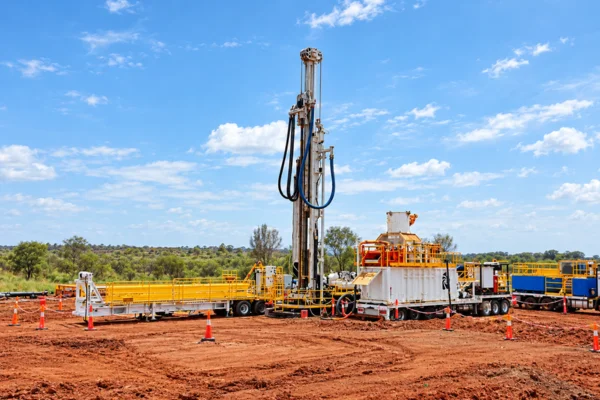
Rotary and DTH drilling achieve penetration differently.
01. DTH drilling
Combines rotation with pneumatic impact at the bottom of the hole and is particularly suited to competent hard rock. Projects that encounter changing formations may require equipment and tooling selected with those transitions in mind. The geological profile should therefore guide the drilling method rather than choosing a technology solely because it has been used on a previous project.
02. Rotary drilling
Relies primarily on rotational cutting or crushing and is commonly considered for softer, unconsolidated and suitable weathered formations.
Why Choose Synergyrigs Ghana
Complete Rotary Drilling Setup
The rig can be considered together with drill rods, bits, mud pumps and other supporting equipment required for the intended drilling method.
Equipment for Repeated Borehole Operations
Rig capacity, tooling compatibility, mobility and service requirements can be considered for contractors handling ongoing drilling work.
Multiple Rig Platforms
Truck, crawler, tractor-mounted and compact configurations provide options for different transport and site-access conditions.
Supporting Tooling and Components
Drilling tools, circulation equipment and replacement components can be considered as part of the wider equipment requirement.
Formation-Based Rig Selection
Equipment can be selected around expected geology, target depth, bore diameter and intended drilling application.
FAQs About Rotary Borehole Drilling Rigs
1. What is a rotary borehole drilling rig?
A rotary borehole rig advances a drilling tool through the formation using rotational movement. Depending on the drilling method, fluid circulation may also be used to remove cuttings from the borehole.
2. What formations are suitable for rotary drilling?
Rotary drilling is commonly used in soil, sand, clay, weathered material and other softer or unconsolidated formations. The appropriate method depends on the actual geological conditions.
3. What is the difference between rotary and DTH drilling?
Rotary drilling primarily uses rotational cutting or crushing. DTH drilling adds pneumatic impact directly behind the bit and is particularly suited to hard-rock formations.
4. What does rotary torque mean on a drilling rig?
Rotary torque is the turning force produced by the rotary system. The required torque depends on factors including formation, bore diameter, bit type and drilling conditions.
5. Does a rotary drilling rig require a mud pump?
A mud pump is commonly required for mud rotary drilling, where drilling fluid circulates through the borehole to transport cuttings. Requirements depend on the specific rotary drilling method.
6. Can rotary rigs drill water boreholes?
Yes. Rotary rigs are widely applicable to water-well and groundwater drilling where geological conditions suit the selected rotary method.
7. How deep can a rotary borehole drilling rig drill?
Depth capability depends on the rig specification, formation, hole diameter, drill-string arrangement, circulation system and other operating conditions.
8. What equipment is required with a rotary drilling rig?
Depending on the method, the setup may include drill rods, rotary bits, mud pumps, circulation equipment, casing tools and other drilling accessories.
9. What information should I provide when requesting a rotary rig?
Provide the expected formation, target depth, required bore diameter, drilling application, site conditions and expected workload. If you already have a mud pump or drilling tools, include their specifications.